NOTE: Please acknowledge the authorship of these program notes by Jose Elizondo, the composer, if you use them for publicity material, concert program notes, or any other publication.


·                  


Die Legende des edlen Ritters

The Legend of the Noble Knight


La Leyenda del Noble Caballero


·        Commission: Commissioned by and dedicated to Benedict Klöckner

·        Duration: 15 minutes

·        Mood: epic, cinematic, lyrical

·        Movements: Suite in four movements. They can be performed as a suite or independently

·        Premiere:

o   Cellist Benedict Klöckner premiered the first movement of this piece on July 5th, 2020 at Schloss Burg Namedy in Andernach, Germany.

o   The violin and cello duet version of this piece was premiered by Benedict Klöckner and Yury Revich, on July 11th, 2020 at Kloster Eberbach in Eltville am Rhein, Germany, and this version was first recorded by Joe Zeitlin and Dan-Iulian Drutac in London and published on September 13th, 2024.

o   The premiere of the cello concerto version took place on March 11th, 2023, in Appleton, Wisconsin, with the Fox Valley Symphony Orchestra, conducted by Kevin Sütterlin. Cello soloist Eunghee Cho kindly stepped in as the featured soloist, substituting Benedict Klöckner who was unable to attend the premiere due to illness.

o   The chamber version of the cello concerto was premiered on September 8th, 2023, in Washington, DC by Benedict Klöckner and the New Orchestra Washsington, conducted by Alejandro Hernández-Valdez.

o   The premiere of the saxophone concerto version of this piece was done by saxophone soloist Manu Brazo and Orquesta Sinfónica de Utrera in Spain, conducted by Manuel Busto.

o   Cellists María Gómez and Alejandra González premiered the 2-cello version of the first movement of this piece on December 16th, 2021 at the Koninklijk Conservatorium Brussel in Belgium. And the complete 2-cello version was recorded by Joe Zeitlin in London. That recording was published on December 28th, 2024.


Program Notes by José Elizondo:


In 2020, Benedict Klöckner commissioned Jose Elizondo to write a cello solo piece for his new album. The project paired each of Bach’s Cello Suites with a piece by a contemporary composer. Jose wrote "Under the starry sky of the Rhine" inspired by Mr. Klöckner’s performance of the Gigue in Cello Suite #6, including multiple quotes from the Gigue in his composition. The piece was premiered literally under the starry sky of the Rhine, at a beautiful outdoor concert in the gardens of a palace by the river Rhine. It has been performed in many concerts by Mr. Klöckner, including at the Alte Oper Frankfurt and the Berlin Philharmonie. This piece served as a starting point for what eventually became the first movement of the cello concerto "The Legend of the Noble Knight". In addition to the references to Bach's suite #6, Elizondo included multiple elements that referenced Mr. Klöckner’s homeland in Rhineland-Palatinate, such as the evocative landscapes and medieval castles of the region, as well as the legends associated with them.


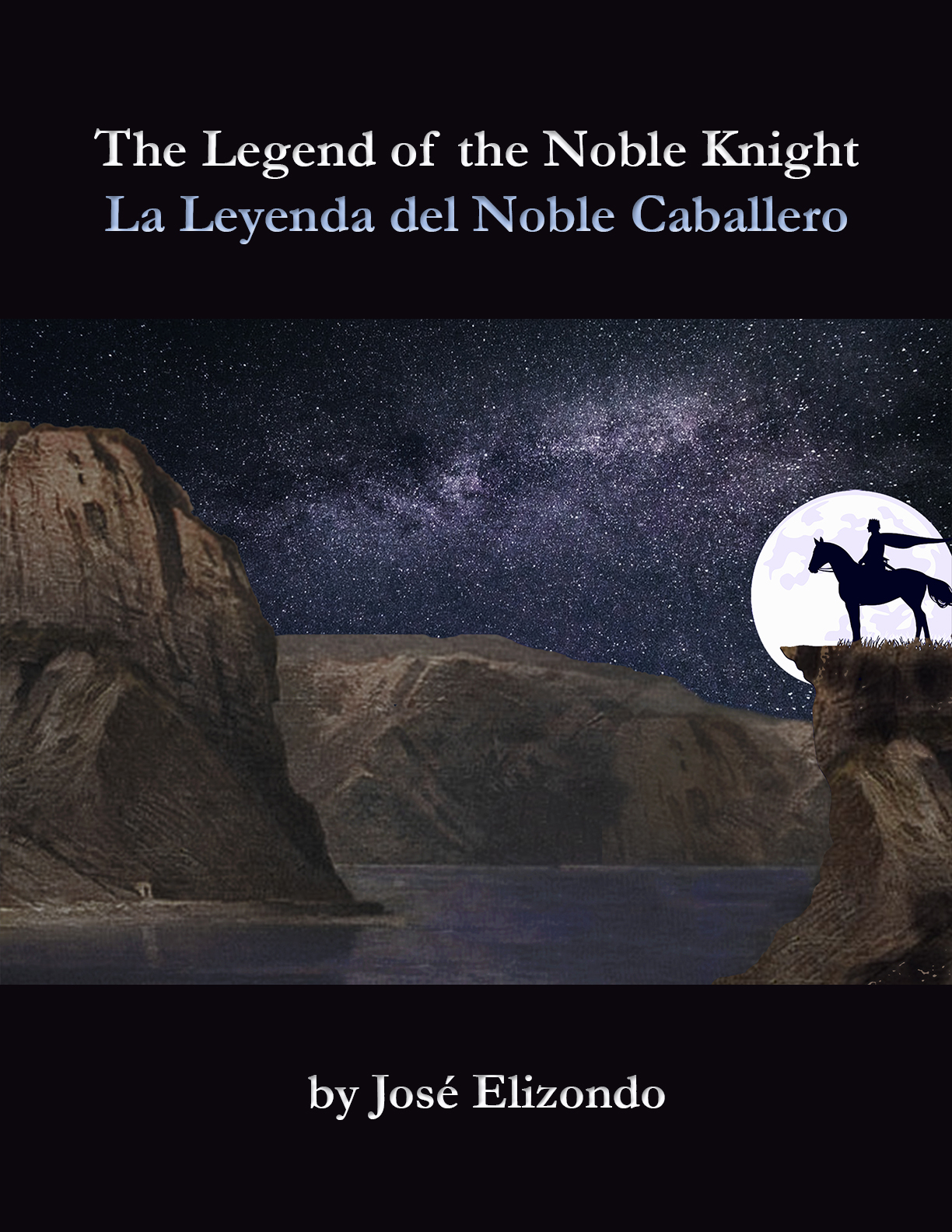
·        1. Under the starry sky of the Rhine. An additional source of inspiration for this movement was the painting "Wanderer above the Sea of Fog" by German artist Caspar David Friedrich. At the opening of the piece, the composer imagines the mood of Friedrich's painting, except in his vision, the protagonist is a medieval Knight, intrepidly standing upon a rock at the edge of the Rhine, in awe of the might of nature. As the movement develops, we hear music evocative of the Knight, who at times is riding his horse on the banks of the river Rhine, and at other times stops to admire the beauty of the starry sky and to meditate upon his life. The "Knight's motive", derived from a musical interpretation of the names of Bach and Benedict merged with a motive from Bach's Gigue, is presented in various forms that undergo geometrical transformations. These motivic variations highlight different aspects of the character of the Knight: courage, kindness, heroism, modesty, selflessness, nobility. The shape of some other melodies played by the cello are based on the shape of natural landmarks in the Koblenz region of the Rhine.


·        2. The Night Flower. The poems of Joseph Karl Benedikt von Eichendorff led the composer to becoming enamored with the idea of the delicate and elusive “night flower”, a symbol that in German Romantic poetry of the XIX century represents the balance of humanity with nature and spirituality. The second movement attempts to provide a musical comment about the ephemeral beauty and significance of the night flower which blooms only for a brief moment and appears only to those possessing inner peace and harmony. In this movement, the cello is more a commentator than a protagonist, to symbolize the Knights modesty when coming upon the night flower. As the flower's petals fall towards the end of the movement, we hear the "Knight motive", as if the Knight gently gathers the petals and puts them in the pocket near his heart.


·        3. Lorelei’s Redemption. This movement uses the Gregorian melody Dies Irae, and variations of it, to represent the chant of the Lorelei, in an attempt to incorporate the legend of the unfortunate princess-turned-enchantress associated with one of the geologic features of the banks of the Rhine. Instead of being lured into his death, as was the fate of many sailors in the Lorelei's lore, the Knight hears the sorrow in the chant of the Lorelei, comforts her, and in a crucial moment of this piece, gives her the magical petals of the night flower. His generous gesture deeply moves the Lorelei, awakening her heart and freeing her spirit from the enchantment that kept her trapped in the mighty rock at the edge of the Rhine. At the moment of redemption, her chant is transformed into a sweet breeze that disappears serenely into the horizon, as we hear the Knight ride away.


·        4. A Hero’s Welcome. This movement synthesizes the various musical and extra-musical themes introduced throughout the piece, bringing back, among other things, the Knight's theme and the melodies associated with the Bach Gigue from the Cello Suite #6, as if the Knight has come home from his long journey and is being celebrated by his friends and family. The etymology of the name Klöckner refers to the person associated with ringing church bells. The full orchestra version of this piece incorporates the sound of bells at the conclusion of this movement.


The following poem was inspired by the music of this piece. It can be optionally used to complement the program notes. It has even been read by a narrator before each movement during the performance of the piece.


The Legend of the Noble Knight

La Leyenda del Noble Caballero


Music by José L. Elizondo

Poetic narration by Patricio F. Mendez

(based on an original story by the composer)


Under the starry night of the Rhine


Perfect stars, uneven path.

In between them: The Noble Knight,

wandering under the pure glow.


Rocks and cliffs do not faze him;

beauty in the unbounded cosmos does.

From the heights, he sees beyond the views.


His purpose, beyond definition.

His courage, beyond intention.

His kindness, beyond power.


Under the starry night of the Rhine,

the world is a better place because of him.


The night flower


Only one bloom, delicate and private.

Only for the worthy,

for those who understand.


A blue star in the land,

a piece of heaven in blossom.

The Night Flower

stirs awe in The Noble Knight.


… and it is over.


Without words, but it is all too clear.

Without resistance, but in one direction.

The petals gently glide back to Mother Earth.


Our hero honors the gift;

recovers the sacred whispers of color

and treasures them near his heart.


His quest, never ending.


Lorelei’s redemption


Peerless beauty,

blinding with darkness.

Ancient legends warned

of wrath and despair.


Lorelei! Oh, Lorelei!

What great unfairness has befallen upon thee?

Who bound thee to suffering

so not even death could grant release?


Thy anguish now a bane upon the blameless.

Thy pain, the final breath of the virtuous.

Thou hast lost thy way.


Come,

I bestow upon thee something precious:

a token of the night, the sun, and azure from mid-day.


Hold it when it’s dark

for it shall reveal the shapes.

Hold it when scared

for it shall bring assurance.

Hold it when vulnerable

for it shall unveil thy strength.


Triumph is not in the cold steel of the blade,

but in the warm embrace of compassion.


Lorelei, now unshackled and free,

memories and souls await your gentle visit.


A Hero’s Welcome


Get out your best clothes!

Set flowers in windows and hair!

Ring the bells in the tower!

The Noble Knight is back home!


His stories, from faraway realms.

His tales, of magic and redemption.

His insight, further than what we fathom.


Let’s celebrate him now that he’s here!

Let’s partake in his virtue tonight!


… and then,


surrounded by the ringing of bronze,

his shape shrinking against a swollen red sky,

the Noble Knight is on his path again.


His legend, ever growing.

His quest, never ending.


Bajo el cielo estrellado del Rin


Las estrellas perfectas, el camino ríspido,

y entre ellos: El Noble Caballero

errando bajo el resplandor puro.


Ni rocas ni precipicios merecen su atención,

pero sí la belleza infinita del cosmos.

Desde lo alto, él ve más allá doquier llegan los ojos


Su propósito, más allá de cualquier definición.

Su coraje, más allá de cualquier intención.

Su bondad, más allá de cualquier fuerza.


Bajo el cielo estrellado del Rin,

El mundo es un mejor lugar gracias a él.


La flor nocturna


Tan sólo un brote, delicado e íntimo.

Sólo para los que lo merecen,

para los que entienden.


Una estrella azul en la tierra,

Una triza de cielo en retoño.

La flor nocturna

pasma de emoción al Noble Caballero


… y acaba tan pronto.


Sin palabras, que no hacen falta.

Sin resistencia, siempre cayendo.

Los pétalos vuelven a la Madre Tierra


Nuestro héroe honra este regalo;

Recoge los sagrados susurros de color

y los atesora en su pecho.


Su búsqueda, incesante.


La redención de Lorelei


Belleza sin par,

oscuridad fulgurante.

Leyendas de antaño alertaban

de furia y desolación.


¡Lorelei, O, ¡Lorelei!

¿Qué gran injusticia ha caído sobre ti?

¿Quién te ha condenado a sufrir así

que ni aún la muerte te ha liberado?


Tu angustia, un castigo a los inocentes.

Tu dolor, el último respiro de los honrados.

Has perdido tu sendero.


Ven,

Quiero darte un tesoro:

Un dechado de la noche, del sol, y el añil del mediodía.


Estréchalo en la oscuridad

pues te revelará las formas.

Estréchalo en el temor

pues te dará seguridad.

Estréchalo en tu debilidad

pues revelará tus fuerzas.


El triunfo no está en la fría hoja de acero,

Si no en el abrazo tibio de compasión.


Lorelei, eres libre ahora,

Almas y memorias esperan tu visita sutil.


La Bienvenida del Héroe


¡Ponte tus mejores galas!

¡Pon flores en los cabellos y las ventanas!

¡Que repiquen las campanas de la torre!

¡El Noble Caballero ha regresado!


Sus reportes, de reinos lejanos.

Sus historias, de magia y redención.

Su sagacidad, más allá de nuestro escrutinio.


¡Agasajémoslo mientras está aquí!

¡Regocijémonos en su probidad!


… y entonces,


Envuelto en el tañer del bronce,

Su silueta se encoje frente a un horizonte rojo.

El Noble Caballero está nuevamente en camino.


Su leyenda, incomparable.

Su búsqueda, incesante