|
NOTE: Please acknowledge the authorship of these
program notes by Jose Elizondo, the composer, if you use them for publicity
material, concert program notes, or any other publication. |
|
|
·
·
·
·
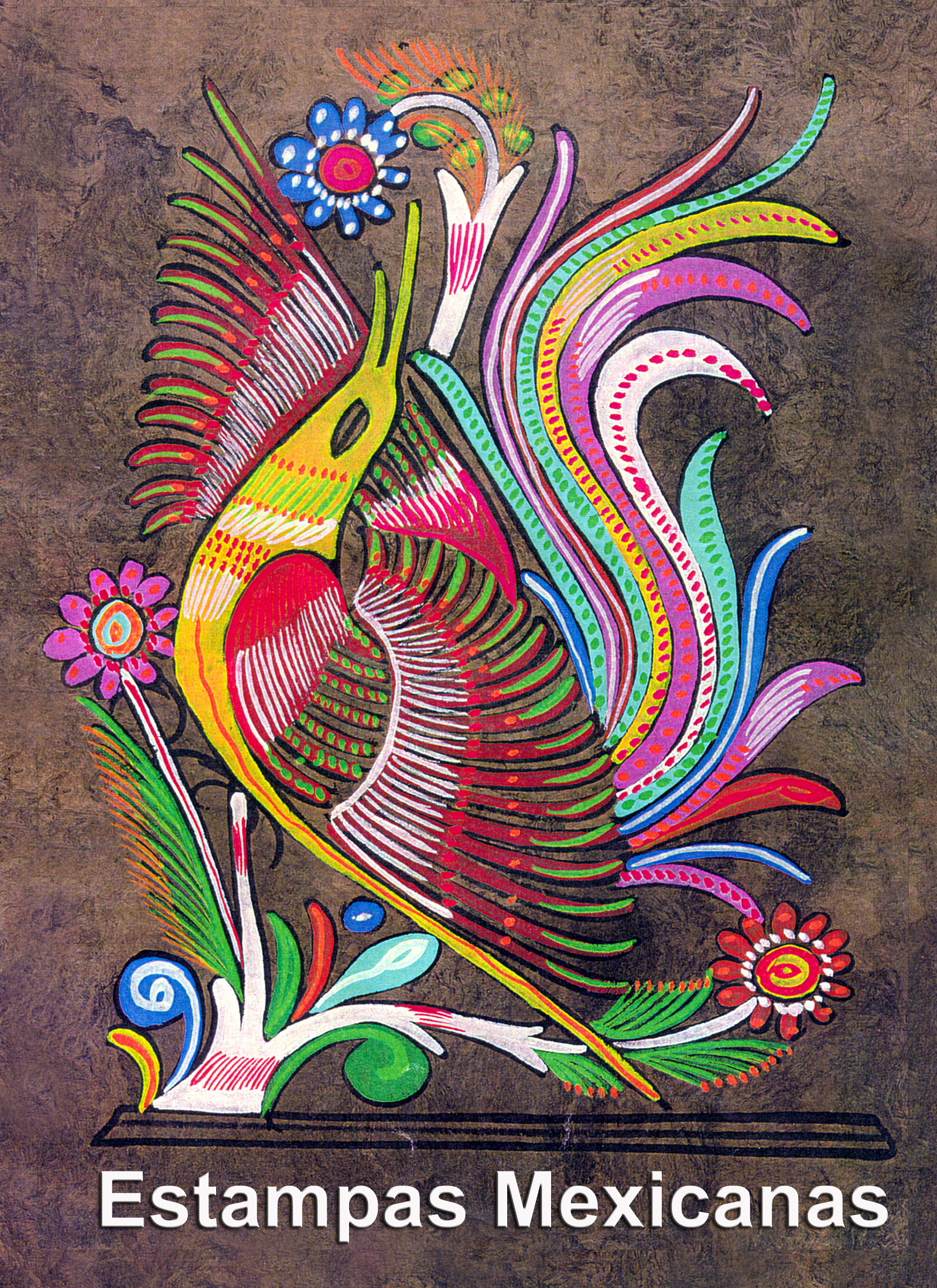
Estampas
Mexicanas
·
I. Ferial
·
II. Danza
del Pájaro Sagrado
·
III. Teotlalli
·
·
Mexican Vignettes
·
I. Parade
·
II. Dance of the sacred bird
·
III. Land of Gods
|
||
|
|
|||
|
·
Length: 10 minutes total for
all 3 movements (each movement approximately 3 mins) ·
Mood: festive, joyful,
Mexican, energetic, rhythmic ·
Movements: Suite in 3
movements. The first and third movements can be performed independently. |
|||
|
·
Premiere: The first
performance of this piece was on December 9th, 1995 with the MIT Symphony
Orchestra, conducted by David Epstein (reading conducted by Alan Pierson).
The professional premiere of this piece was on July 6th, 1996 with the San
Jose Symphony Orchestra, conducted by Leonid Grin. |
|||
|
|
|||
|
Program Notes by José Elizondo: (for the orchestra
versions of this piece) Estampas Mexicanas is a three-movement suite featuring Mexican folk elements. It was Elizondo’s first composition and is an homage to three of his favorite Mexican composers. In particular, it is inspired by the rhythmic vitality of the music of Carlos Chávez, the ritualistic mysticism of Silvestre Revueltas, and the lyric melodies of Manuel M. Ponce. The first movement, Ferial, is a festive parade of simple, colorful, folk-like tunes and rhythms. The opening of this movement pays homage to composer Carlos Chávez, paraphrasing the opening measures of his magnificent "Sinfonía India". The second movement, Danza del Pájaro Sagrado, presents an imagined Aztec ritual which uses texture and rhythm to paint a musical image of step-pyramids and ritual dances. And the third movement, Teotlalli, includes clear references to the Mexican mariachi music tradition. I. Ferial A “Ferial” is a combination of a religious
procession with a street parade, typical of central Mexico. It is a fitting
title for the first movement of “Estampas
Mexicanas,” which parades simple, colorful, folk-like tunes and rhythms. The
piece makes reference to a historic moment in the development of Mexican
classical music. Having attained its political independence from Spain and
gone through the Revolution war of 1910, Mexico was left to explore how to
reconcile the diverse elements of its rich cultural heritage. Some composers
that had been writing in the European salon-music styles favored prior to the
Revolution, now started to more vigorously incorporate folk musical elements
in their compositions. Ferial plays
with that juxtaposition of Spanish and native Mexican elements. The opening measures feature a
paraphrase of the opening measures of “Sinfonía
India” by Carlos Chávez. However, Elizondo takes this musical material in a
different direction to paint a vignette of an exuberant street parade. In the
Latin percussion of this movement, one hears the festive sounds of a town
celebration and even the sound of “Matachines” (“Matachines” are autochthonous dancers that participate in
major Mexican religious parades, wearing shells and other ornaments in their
hands and feet to create percussion music as they dance). After the festive
sounds and energetic rhythms, the music becomes more intimate, presenting an
interlude in the form of a waltz reminiscent of the salon music popular in
early 20th-century Mexico. The melody of this section is more self-conscious
and distinctly European, as is the suggestion of the waltz form in which it
is presented. It is as if the exuberance of the native Mexican world had been
allowed to be displayed in public but not invited into the intimate salons of
the Spanish homes of the aristocracy of the New Spain. The opening music of
the movement comes back in different forms --irregular, repetitive, primal,
vibrant. The pervasive sense of joy and festivity brings Ferial to a hopeful conclusion. II. Danza del Pájaro Sagrado The second movement, Danza del Pájaro Sagrado (Dance of the
Sacred Bird), is a more introspective piece evocative of an imagined Aztec
ritual invocation of a bird god. It was inspired by composers from the
reactionary movement that sought national identity in the music of the
Mexican native people, like the Aztecs and Maya, consciously trying to avoid
European influence. Spanish missionaries had destroyed most documentation of
such music, and without the results of research that are available now,
composers from the early 20th century could only “imagine” what
Aztec or Mayan music would have sounded like. The orchestration of Danza del Pájaro
Sagrado is sparse and symbolic, walking the listener through the scene of
an imagined Aztec ritual. The cyclical and simple bass drum figure pulsates
like the heartbeat of a giant earth goddess. It is soon joined by a drum
figure in the congas that, like a trance-inducing mantra, is repeated time
and time again, unchangeable. A pizzicato motive starts in the low strings,
later echoed and joined by new layers of ever-higher strings that lift the
ritualistic procession upwards, as if climbing a step pyramid. The piccolo’s register was chosen to sound like a
clay ocarina. The piccolo sings an invocation, piercing the air filled with
mystery. Its incantation transports the participants of the ritual, supported
upward by the step pyramid of the strings, from the plane of the earthly to
the realm of the divine bird god. Colorful blocks of woodwinds join the
piccolo at the top of the pyramid, moving in parallel, in a relatively primal
but relaxed motion, performing some sort of brief dance. Then, they stop and
we hear the pyramid effect in reverse. The strings retreat to the nothingness
from which they came, first carrying the piccolo invocation with them, then,
accompanied only by the percussion mantra. There is one subtle difference in
the invocation. The piccolo has been joined by a bassoon. The divine shadow
is now visible on the earthly realm. Eventually, the heartbeat of the land,
the giant goddess, is the only thing left. Seemingly as an answer to the
ritual, the song of the bird, perhaps the bird god itself, is heard at the
end. It evaporates with the sound of the mystical gong. III. Teotlalli The third movement, Teotlalli ( This movement is inspired by Mexican
composers who sought to find a voice for Mexican music, not rejecting its
many influences, but simply synthesizing the European, native-Indian and
mestizo sounds, as well as the very prominent folk music from the time of the
Mexican Revolution. The rest of the movement is more varied, like Mexican
history of the post-Revolutionary period. We are no-longer facing the
romanticized salon music of the Pre-Revolutionary period, or the imagined
pre-Hispanic ritual music of the early Post-Revolutionary
composers. This new music might be somewhat chaotic and eclectic, but it is
less self-conscious, more comfortable and it thrives in the presence of folk
traditions, even in the sound of the Mariachi band, which is now the most
recognizable form of Mexican folk music worldwide. Festive, like the first
movement, but more Mexican somehow, Teotlalli is a
celebration of this legendary Land of Gods. |
|||
|
|
|||
|
The following poem was inspired by the music of
this piece. It can be optionally used to complement the program notes. It has
even been read by a narrator before each movement during the performance of
the piece. Estampas Mexicanas Mexican Vignettes Music by
José L. Elizondo Poem by Karina
Melendez (based on the music and
conversations with the composer)
|
|||
|
|
|||